TABLE TALKS | How Baker Ana Jorge Found Her Calling One Loaf at a Time
A Danish-trained baker brings the ritual of artisan bread — and a taste of nostalgia — to Braga.

Welcome back to Table Talks ☕️ — an interview column where I pull up a seat across from the tastemakers and visionaries blazing trails and inspiring us in the process with their story, passion, and purpose.
Today, we’re sitting down with Ana Jorge — the founder of Nørre Padaria who’s giving us the inside scoop on how fresh made bread can bring us back to our most cherished roots.

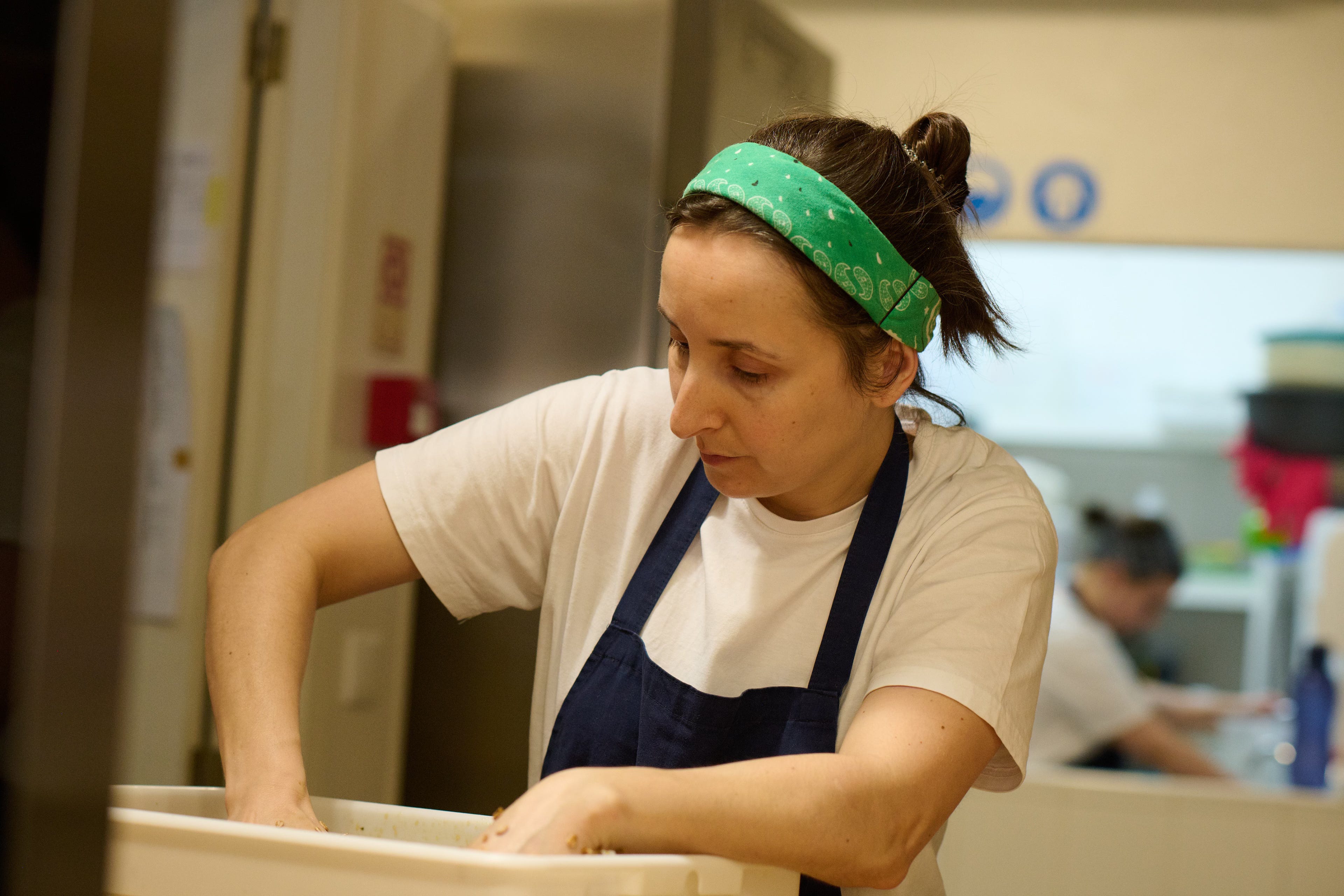
Ten minutes before opening, Ana Jorge stood in her sourdough bakery surrounded by 100 kilos of fresh bread and felt the panic start to set in.
“What if nobody comes? What if Braga doesn’t want this kind of bread after all?,” she worried.
Her eyes darted to her assistant.
“Do you have a big family? Can you take some of this home?” 😵💫
She thought her heart was going to leap out of her chest.
But then the doors opened, 8:30am on the dot.
A line had formed outside — people waiting and curious. Within two hours, every last loaf of sourdough bread was sold.
Seven years later, Nørre Padaria is the kind of place where customers stock up with six, eight, ten loaves at a time, especially before the store’s annual holiday break.
Starting their day without Nørre’s bread? Unthinkable.
And the pastries? Equally irresistible.


In a world so far removed from how things are made (even in Braga where sub-par bread is often imported from commercial factories in Spain), Ana has built something rare: a bakery that gets us back to our roots. Back to creating with our hands. Back to the ancient ritual of transforming flour and water into something otherworldly.
Proofing 👩🏻🍳
Ana Jorge didn’t set out to become a baker.
Growing up, she imagined a future in healthcare and ended up studying biomedical technology at university, fascinated by lab work and blood analysis.
But when she graduated, the reality of the job market was sobering. Jobs were scarce, laboratories were consolidating, and the role she initially landed used only a fraction of what she’d trained for.
Each year, equipment evolved. And with it came the fear that by the time a real opportunity came around, she’d already be behind.
Something had to give.
As Ana considered her next move she began reflecting back on joyful childhood memories: baking tea cakes with her aunt on Sunday mornings or glued to the television set as a teen watching The Jamie Oliver Show and Masterchef.
She suddenly saw a different path for herself.
Not long after, Ana enrolled in a culinary arts program, hoping to pursue the life of a chef. An internship at a two-Michelin-star restaurant in Oxford, England seemed like the dream.
But within days, the pressure and chaos made one thing clear: this wasn’t her dream at all.
She tried again in Denmark at Relæ, another Michelin-starred kitchen run by ex-Noma chef Christian Puglisi. Same intensity. Same realization.
But Puglisi had just opened something different — a sourdough bakery called Mirabelle.
Ana asked if she could work there instead.
The sous chef stared at her. “Are you sure? This is a Michelin-star restaurant.” 🤔
Ana trusted her gut. “Yes. I’m sure.”
What started as week-long stage opportunity stretched into another week. Then a month. Then four years.
Finally, this felt like her dream.
Help Kneaded 🍞
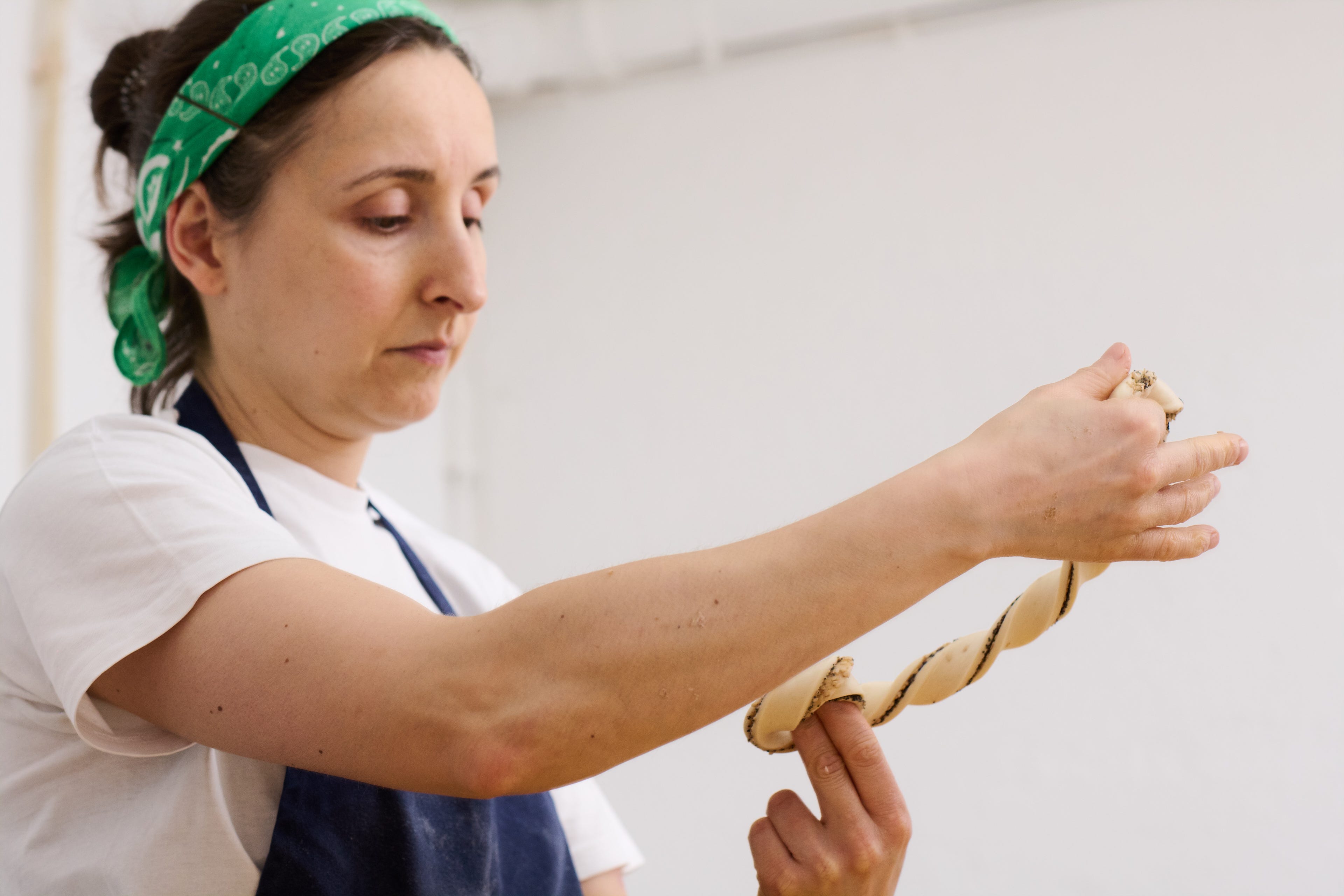
Far away from those she loved in Portugal, Ana was homesick. She couldn’t bear being away from them another year so she decided to return for good.
At first, she started the way most bakers do — making small batches of bread at home for friends and family, sharing what she learned.
Her father, especially, couldn’t get enough.
Growing up, their family vacations to the Algarve meant loading the car with flour bags stuffed full of the region’s famous dark loaves — the kind made with dense, nutritious flour and slow fermentation.
Her father would freeze them, rationing the bread over months because nothing in Braga came close.
Now his daughter was baking bread he loved. Right here at home. The kind he’d been chasing for as long as she could remember.
Soon, word spread. Demand grew. And Ana opened Nørre — named after the Nørrebro neighborhood in Copenhagen where she once lived; its name means “north” (also a nod to her roots in Northern Portugal).
For the first year, she did everything herself — mixing dough before dawn, shaping loaves, cleaning up after close. One person helped at the counter, but the baking? That was all Ana.
Despite her booming business, Ana couldn’t sustain the demand.
Enter Tiago.
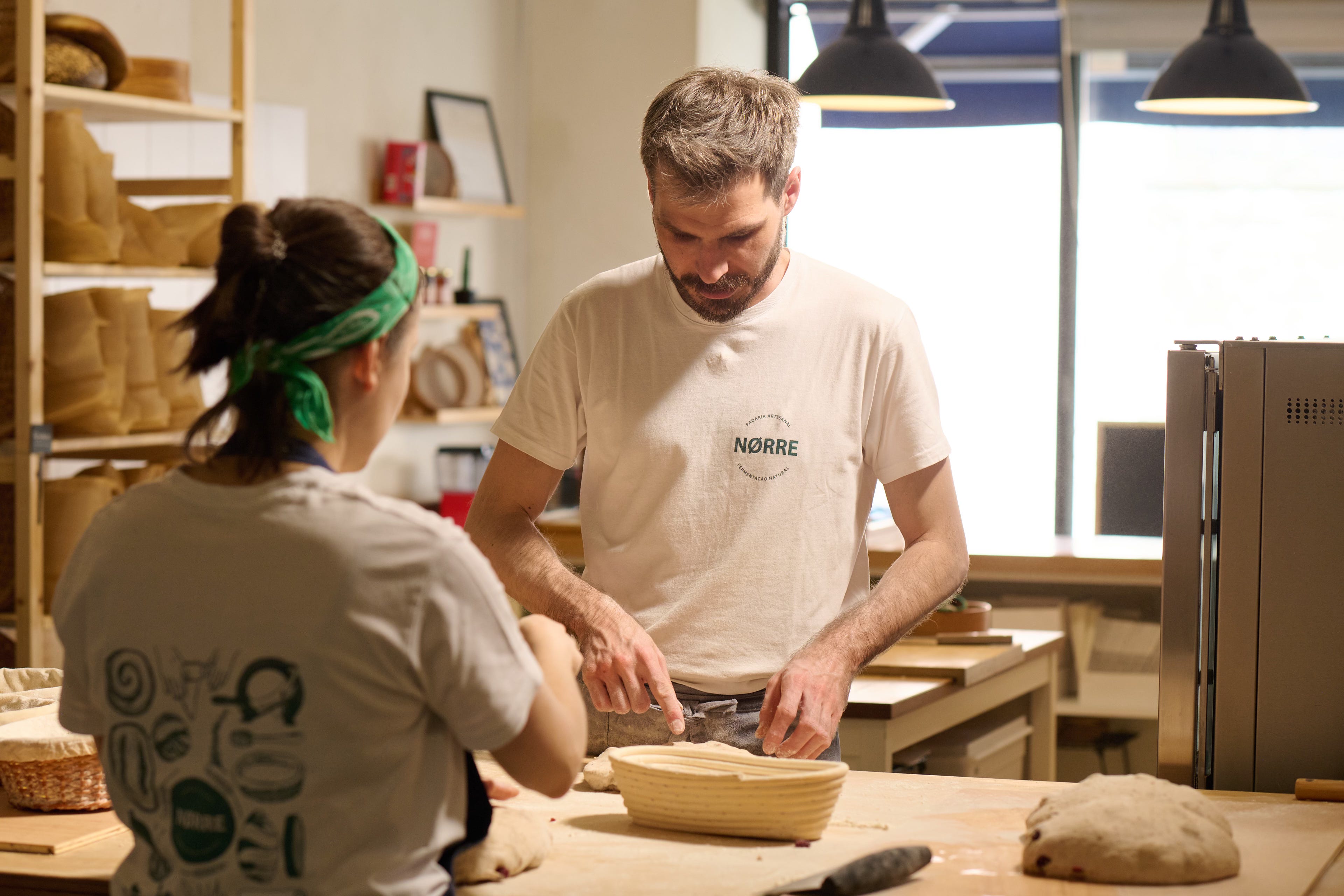
Born and raised Portugal, he worked as a web developer in Rotterdam then Düsseldorf in the startup world before he was ready for a change. Between jobs in Germany, he started baking at home.
Near his apartment was a sourdough bakery he loved. One day, he walked in with his usual order and, on a whim, asked if he could help out.
They said yes.
“I didn’t even understand what sourdough was,” Tiago laughs now. “But I went for six months, two days a week.”
The bakers didn’t speak English. He learned by watching — feeling when the dough needed more water, sensing when it was ready. His programmer’s brain loved the precision, but what he loved most was the sensory experience of creating something with his hands.
When Tiago made the move back to Portugal, Nørre bread – coincidentally – was sitting on his friend’s kitchen table. “I heard the owner needs help,” they mentioned casually.
Tiago showed up, ready to volunteer his services. But Ana turned him away. She was too overwhelmed, too busy, and had too little time to train anyone.
But he came back. He could see she was completely drowning.
That was six years ago. They’ve been collaborators — in life and at the bakery — ever since.
The Yeast of Their Worries 🥣
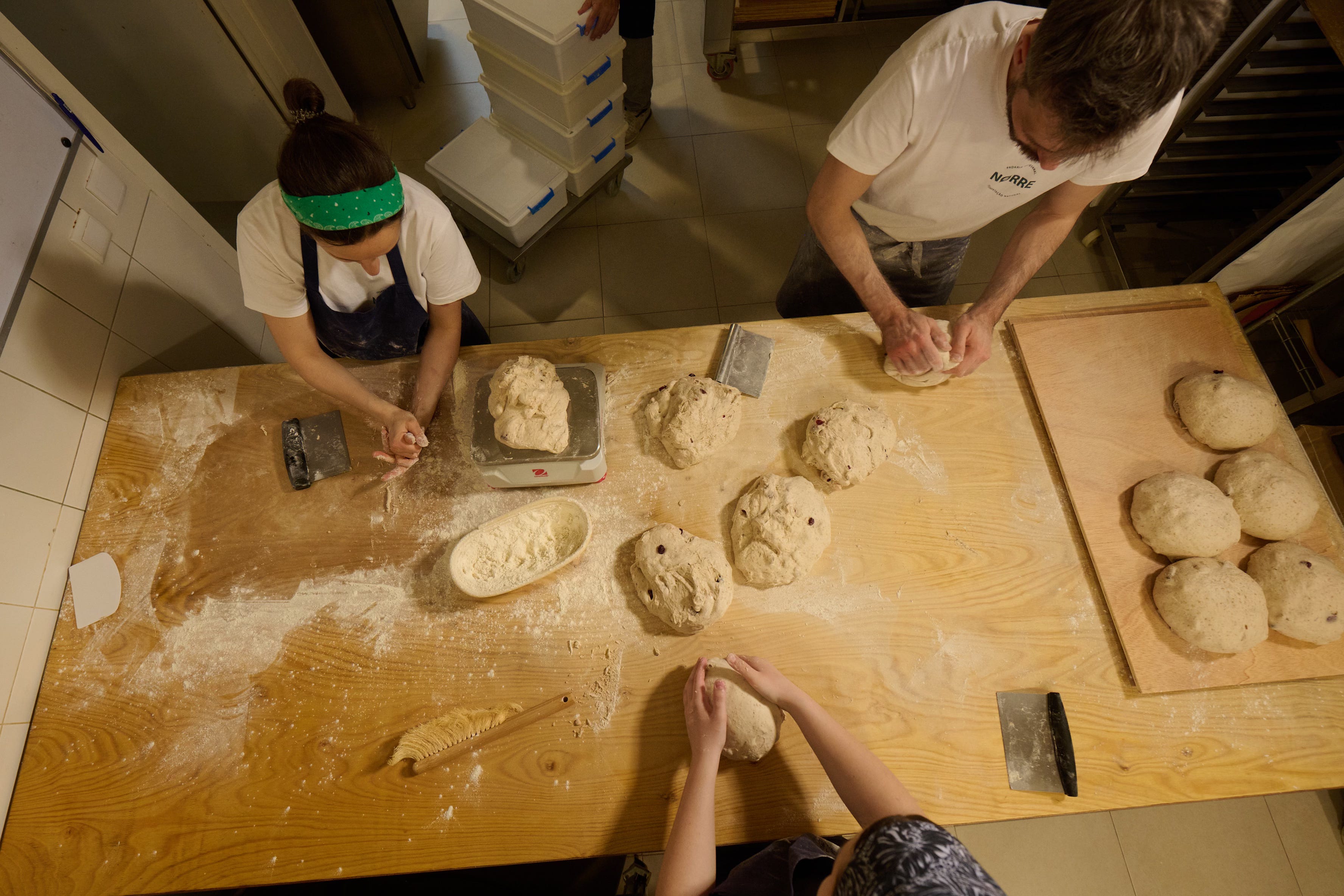
Every morning at Nørre begins the same way: Ana and Tiago tend to their 15-year-old sourdough starter, the one Ana carried home from Denmark like a family heirloom.
“My teenager,” she calls it, smiling. Although it has no name, it “only wants to be fed every day. Flour and water.”
It’s a ritual. Flour, water, patience, time. Over and over again.
Most things worth loving demand this kind of care — consistent attention and daily devotion.
That kind of love also lives in the broa de milho made at Nørre — specialty Portuguese corn bread placed on a cabbage leaf (to prevent burning) and baked slowly the way grandma once did.
Each batch transports them back to childhood, to simpler times, to kitchens where ritual was everything.
That’s probably why baking is so popular today. Nostalgia shows up in social feeds with people making everything from homemade breads to pastries and special treats.
And it makes sense, of course. In a world that feels like it’s on fire — socially, politically, environmentally — there’s a collective yearning right now for simpler times and simple pleasures.
That’s exactly what Ana and Tiago are offering at Nørre. Not just bread, but a time machine — to Sunday mornings, to family kitchens, to cherished memories.
💡Noteworthy:
Are you wondering what sourdough is exactly?
According to Good Food, “Sourdough is naturally leavened bread, which means it doesn’t use commercial yeast to rise. Instead, it uses a ‘starter’ – a fermented flour and water mixture that contains wild yeast and good bacteria – to rise.”
That “wild” yeast is literally caught from the air/environment around us and cultivated over time. It’s what gives sourdough its tangy flavor and slightly chewy texture — and why it has more depth than bread made with commercial yeast, which often has additives.
The more you know. 🌈✨
Bonus 🎁
One last thing before you go!
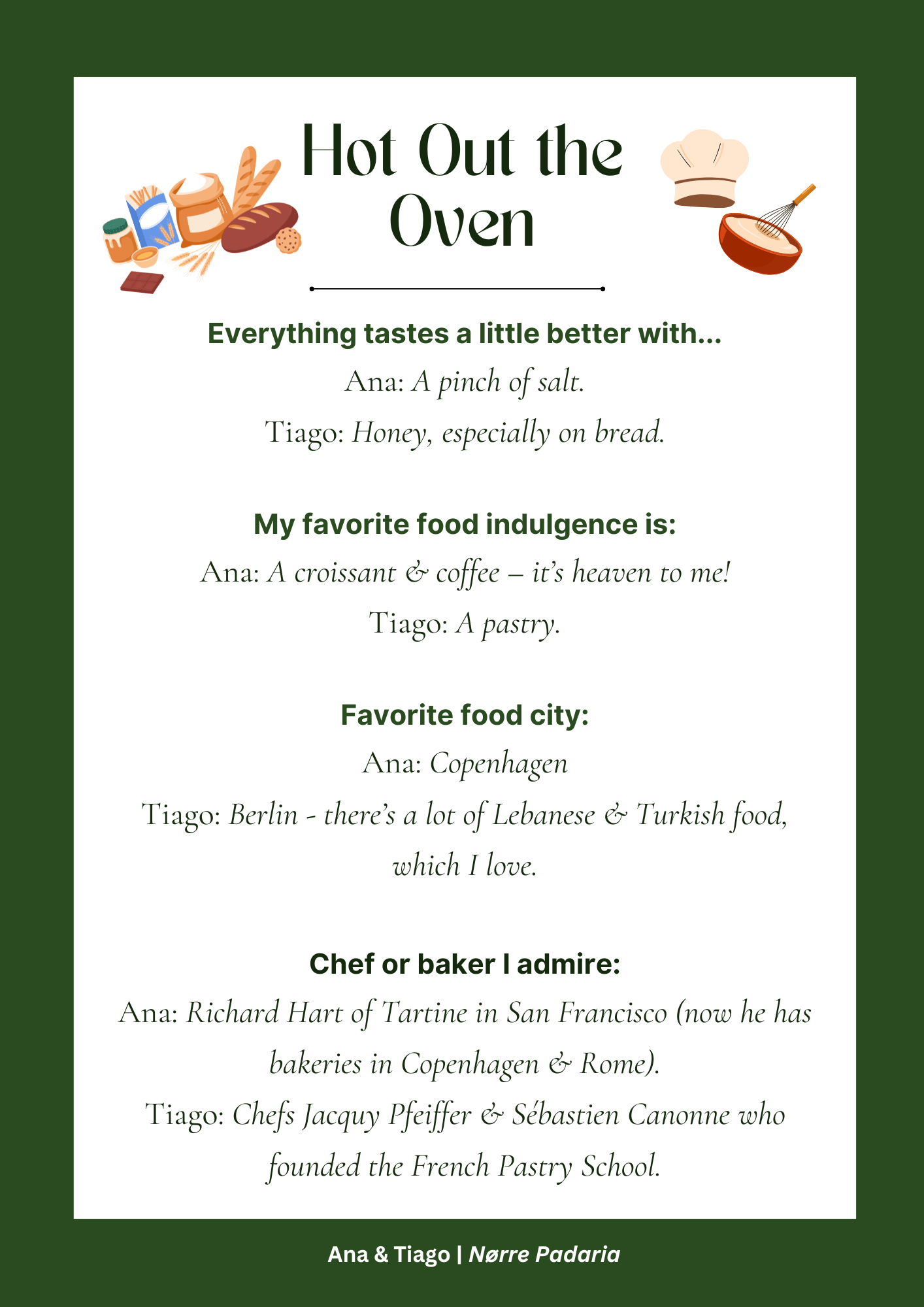
At the end of my interview with Ana and Tiago, I posed a round of rapid-fire questions in a segment, aptly titled: